How to Become a Pilates Instructor
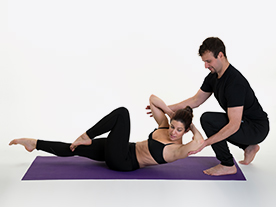
Pilates instruction is one of the few careers where specialist knowledge, physical skill, and genuine interest in other people's wellbeing all count equally. Understanding what the work actually involves, and what it asks of you, is the right place to start.
What a Pilates Instructor Actually Does
The job is not primarily about demonstrating exercises. An experienced Pilates instructor spends most of their time observing: watching how a client moves, identifying where they compensate, deciding what to adjust and how to communicate that adjustment in the moment. The exercises, the apparatus, the sequencing logic are the medium through which that work happens. They are not the work itself.
In practice this means teaching private sessions, duets, and group mat classes. Private sessions are one-to-one, typically 55 minutes, with a program tailored to the client's body, goals, and any history of injury or structural asymmetry. Group classes trade individual adjustment for volume: more students, fixed programming, cueing that must work across different bodies simultaneously. Most instructors do both, and the skills required are meaningfully different.
The work also includes client intake and assessment, program design, adapting for pre- and postnatal clients or those recovering from injury, and maintaining your own continuing education as the field evolves. Instructors who work independently also handle scheduling, billing, and client communication. Those employed by studios typically have those tasks handled for them in exchange for a fixed rate per class or session.
The best Pilates instructors are students of movement who happen to teach Pilates, not the other way around. Certification is the starting point, not the destination.
Job Outlook and Salary
Demand for Pilates instructors has grown steadily and shows no sign of reversing. The U.S. Bureau of Labor Statistics projects 14% job growth for fitness trainers and instructors between 2023 and 2033, roughly three times the average across all occupations, driven by an aging population seeking low-impact exercise and expanding corporate wellness programs.[1] The global Pilates certification market is projected to grow at an 8.09% CAGR through 2030 as demand for qualified instructors outpaces the current supply.[2]
Salary varies considerably by location, employment type, and how much apparatus training a teacher holds. According to December 2024 data from ZipRecruiter, the median hourly rate for a Pilates instructor in the U.S. is $34, with full-time annual salaries ranging between $48,000 and $86,000.[3] Instructors offering private apparatus sessions in major markets often exceed that ceiling. Instructors who own studios operate under a different model entirely, with income tied to business performance rather than session count.
The income gap between mat-only and comprehensive-apparatus instructors is real and worth understanding before choosing a program. A mat certification qualifies you to teach mat classes (which are in high demand) but limits access to private apparatus sessions, which carry a higher rate and are the core offering of most boutique studios. Instructors who intend to work full-time in a studio setting typically need a comprehensive program covering mat and all major apparatus.
Is This Career Right for You?
Pilates instruction suits people who are genuinely curious about human movement, comfortable working one-to-one with a wide range of bodies and histories, and willing to keep learning after certification. The job requires patience: progress in Pilates is often slow and nonlinear, and helping a client feel a connection they have never felt before, whether between breath and movement or between effort and ease, is the kind of work that either matters to you or it does not.
Instructors are on their feet for most of the working day, physically demonstrating, verbally cueing, and manually guiding movement simultaneously. The physical demands are real, and maintaining your own practice becomes a professional necessity rather than an optional extra.
The flexibility is genuine. Many instructors build schedules around other commitments, teach across multiple studios, or combine in-person and online sessions. That flexibility comes with income variability, particularly in the early years while building a client base. Studios with existing client books are worth seeking out at the start, even at a lower rate, because the floor of guaranteed sessions matters more initially than the ceiling of potential earnings.
The Path to Becoming a Certified Pilates Instructor
There is no single regulatory body governing Pilates certification the way that nursing or physical therapy is governed. In this environment, the most meaningful credential is one that is internationally recognized: accepted by professional studios, continuing education bodies, and employers across markets, not only in the country where the training took place. For comprehensive programs, training hours are the clearest structural signal of rigor: programs under 400 hours represent an abbreviated foundation; 400-hour programs cover the minimum apparatus range; 450-hour programs meet the widely cited comprehensive threshold; and 600-hour programs, including Power Pilates' Comprehensive Training, go further with extended apparatus depth and supervised teaching practice.
Most programs expect prospective students to have experience as a Pilates client before beginning. You cannot reliably teach what you have not felt in your own body. Several months of consistent practice, including private sessions, gives you the foundation to get meaningful traction from teacher training from day one.
Mat certification allows you to teach mat classes and is available online or in person. Comprehensive certification covers mat and all major apparatus: Reformer, Cadillac, Chair, and Barrels. It requires significantly more time and investment but opens the full range of teaching opportunities.
Look for programs with documented lineage or accreditation, named and verifiable faculty, practical assessment by qualified instructors, and recognition by professional studios. See our guide to evaluating certification programs for the specific questions to ask.
Rigorous programs combine theoretical instruction with observation hours and supervised teaching practice. The observation and practice components are not optional extras. They are where procedural skill actually develops. Theory can be learned online; the ability to teach cannot.
Assessment-based programs require you to demonstrate teaching competency, not just theoretical knowledge. Confirm before enrolling that practical assessment is conducted by a qualified instructor rather than automated.
Certification is the beginning. Most instructors who build lasting careers continue through continuing education, further apparatus training, and mentorship. The field rewards teachers who treat learning as ongoing rather than complete at the point of certification.
What Studios Look for When Hiring
Hiring decisions at boutique studios are rarely made on certification alone. A recognized credential from a well-regarded program gets you in the room. What keeps you there is different.
Methodological alignment
Studios with a clear methodological identity, classical or contemporary, tend to hire instructors trained within that tradition. Before applying anywhere, look at where the studio's existing instructors trained and what that signals about their standards. A misaligned hire rarely works out for either party.
Apparatus range
The broader your apparatus knowledge, the more useful you are to a full-service studio. An instructor who can run a complete apparatus session (mat, Reformer, Cadillac, Chair, and Barrels) covers more of the schedule and delivers more of what clients at a dedicated studio are paying for. Mat-only instructors are valuable in group class settings but rarely fill a private session schedule in a full-apparatus studio.
Teaching presence
Clients paying for private sessions expect instruction that feels attentive and calibrated to them specifically. Studios look for instructors who can hold a room, communicate corrections clearly, and adapt in real time. These skills develop through teaching experience, not study.
Professionalism and continuing education
Reliability, punctuality, appropriate client communication, and the discipline to maintain continuing education. Studios with strong reputations protect them by hiring people who share the same standards. A referral from a respected instructor within a program's network carries significant weight.
Frequently Asked Questions
Do I need prior Pilates experience before training to teach?
Most programs expect some experience as a Pilates client before you begin. The reason is practical: you need to understand the exercises in your own body before you can reliably communicate them to someone else's. Several months of regular practice, ideally including some private sessions, gives you the body knowledge to benefit fully from teacher training from day one.
How long does it take to become certified?
For a mat certification, typically three to six months depending on program format and pace. For a comprehensive apparatus certification, programs typically run one to two years, with variation driven by format: weekend intensives, apprenticeships, or online components with in-person residencies. The Well-regarded comprehensive programs run between 450 and 600 hours across mat and full apparatus; Power Pilates' Comprehensive program is 600 hours.
Is Pilates teaching a viable full-time career?
Yes, for instructors who approach it strategically. Full-time income typically requires a combination of group classes and private sessions, possibly across more than one studio, with a client base providing reliable recurring sessions rather than only drop-ins. It takes most instructors one to three years to build the kind of book that supports full-time income without depending on maximum class loads. Comprehensive apparatus certification substantially increases earning potential relative to mat-only.
Can I teach Pilates without being certified?
Professional studios require it, liability insurance requires it, and clients increasingly ask about it. The credential exists because the competency it represents matters to the people you serve.
What is the difference between Classical and Contemporary Pilates?
Classical Pilates preserves the original system developed by Joseph Pilates: the same exercises, the same order, the same apparatus, transmitted through direct lineage from the instructors he trained. Contemporary Pilates incorporates modifications and draws on subsequent research in anatomy and biomechanics. Both require rigorous training. The choice depends on your own practice background and where you intend to work. See Classical vs. Contemporary Pilates for a full comparison.
References & Sources
- U.S. Bureau of Labor Statistics. Fitness Trainers and Instructors: Occupational Outlook Handbook. bls.gov. 14% projected job growth 2023–2033. ?
- 360iResearch (2025). Pilates Certification Market Report. Global certification market CAGR of 8.09% projected through 2030. ?
- GlossGenius / ZipRecruiter (December 2024). How Much Do Pilates Instructors Make? Median hourly rate $34; full-time annual range $48,000–$86,000. ?
Power Pilates · Est. 1995
Start Your Teaching Career
Power Pilates has trained more than 20,000 instructors across 40 countries since 1995. Explore mat, comprehensive, and online certification options.
Explore Certification Programs