What is Classical Pilates? A Complete Guide
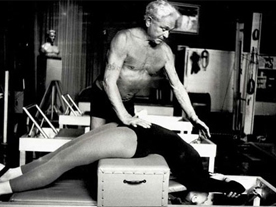
Classical Pilates is the original method developed by Joseph Pilates, preserved and transmitted through a direct lineage of instructors who trace their training back to the source. Understanding what "classical" means — and why it matters — is essential for anyone serious about the method, whether as a practitioner or a teacher.
Classical Pilates is the system of exercise Joseph Pilates called Contrology, taught today with the same exercises, the same sequence, the same apparatus, and the same underlying philosophy he established — passed from teacher to student through a documented lineage traceable to the founder himself.
The Origins: Why the Method Takes This Form
Joseph Hubertus Pilates was born in Mönchengladbach, Germany in 1883. A sickly child who suffered from asthma, rickets, and rheumatic fever, he spent his life studying movement — gymnastics, boxing, yoga, diving, and the mechanics of animals — developing a system that would, in his words, produce "the whole body uniformly developed."
He called his method Contrology: the complete coordination of body, mind, and spirit through controlled, precise movement. Every exercise in the system was designed with intention. Each movement prepares the body for the next. Every piece of apparatus he invented serves a specific function within a larger architecture.
During World War I, interned in England as a German national, Pilates refined his mat-based system while also rigging bed springs to hospital beds so that immobilized patients could begin rebuilding strength — the direct origin of the Reformer and Cadillac. He emigrated to New York in 1926 and opened a studio on Eighth Avenue, teaching continuously until his death in 1967. His clients included dancers from the New York City Ballet and the Martha Graham Company, who valued the method for its ability to build whole-body strength, restore injured bodies, and develop the precise, efficient movement their art demanded.
The method was never a collection of exercises. It was a system — complete, interconnected, and intentional from beginning to end. That completeness is what Classical Pilates teachers are trained to preserve and transmit.
The Lineage: How Classical Pilates Is Transmitted
What distinguishes Classical Pilates from other forms of movement education bearing the Pilates name is lineage — the documented chain of transmission from Joseph Pilates through the first-generation instructors he personally trained, known as the Elders.
The Elders — among them Romana Kryzanowska, Kathy Grant, Ron Fletcher, Carola Trier, Bruce King, and Mary Bowen — each absorbed the work through years of direct study with Joseph and Clara Pilates. Their students, and their students' students, now carry distinct but verifiable lineages of the classical method worldwide.
Power Pilates' connection to that lineage is direct. Bob Liekens, a founding faculty member, trained with Romana from 1983. In 1993 he sat with her at her kitchen table to co-author the first formal classical Pilates teacher training manual — going through every exercise, one by one, over the course of a year. That manual became the foundation for structured classical teacher training worldwide. Two years later, Bob helped establish Power Pilates alongside co-founders Howard Sichel, Phoebe Higgins, and Susan Moran.
Lineage is not merely historical sentiment. It is the mechanism by which the integrity of the method is maintained across time and geography. A certified Classical Pilates instructor can trace their training back to the source — providing a verifiable standard of fidelity that programs lacking this lineage cannot replicate.
What Makes a Pilates Program "Classical"?
Not every program that uses the word "classical" teaches the classical method. The defining characteristics are specific, and understanding them helps prospective students and instructors evaluate what any given program actually offers.
Exercise Order
Classical Pilates follows the sequence Joseph Pilates established — Beginner, Intermediate, and Advanced systems — on both mat and apparatus. The order is not arbitrary; it is designed so each exercise prepares the body for the next, creating a coherent progression that builds strength, flexibility, and coordination systematically. A Classical instructor may modify exercises for a client's needs, but the underlying structure and logic remain constant.
Original Apparatus
Classical Pilates uses the equipment Joseph Pilates designed: the Reformer, Cadillac (Trapeze Table), Wunda Chair, High Chair, Ladder Barrel, Spine Corrector, Pedi-Pole, and Magic Circle, among others. Each piece was engineered to facilitate specific movements and therapeutic outcomes within the system. Classical programs do not substitute resistance bands, foam rollers, or other contemporary props for the original apparatus.
Documented Lineage
Classical instructors are trained within a documented lineage and can identify who they trained under, who that person trained under, and how the chain traces back to Joseph Pilates. Lineage is both a quality marker and a measure of methodological fidelity.
Philosophy of Completeness
Classical Pilates holds that the original method is complete as designed — a whole system that does not require supplementation or modernization to be effective. This is a philosophical position, not a claim of superiority over other approaches. It is simply the premise from which all Classical teaching proceeds.
Classical vs. Contemporary Pilates: The Key Differences
Contemporary Pilates emerged from the 1970s onward as physical therapists, dancers, and movement educators began adapting Pilates principles within new frameworks. Programs such as STOTT (Merrithew), Balanced Body, BASI, and Polestar incorporate modern research in biomechanics and rehabilitation science, modify exercises for wider accessibility, introduce new movements and props, and generally teach a neutral spine position derived from current physical therapy practice.
Many contemporary programs are also structured as modular certifications, allowing components — mat, reformer, apparatus — to be completed separately over time rather than as a single integrated course of study.
Both approaches have real merit. The distinction is not a quality judgment — it is a description of methodology. The relevant differences for someone choosing a certification or a regular practice are:
| Classical Pilates | Contemporary Pilates | |
|---|---|---|
| Exercise order | Fixed, systematic sequence | Variable; instructor discretion |
| Apparatus | Original Joseph Pilates designs | Original and modern variants |
| Props | No supplementary props | Bands, balls, rollers common |
| Lineage requirement | Documented, traceable | Not required |
| Core philosophy | Original method complete as designed | Evolves with new research |
| Certification structure | Comprehensive, integrated program | Often modular; components completed separately over time |
For a deeper look at how these approaches differ in practice, see: Classical vs. Contemporary Pilates — What's the Difference?
The Six Principles of Classical Pilates
Joseph Pilates identified six principles that govern the method. Every session — from the simplest beginner mat exercise to the most advanced apparatus work — is an expression of all six simultaneously. This is what makes the system a discipline, not just a workout.
Concentration
Full, deliberate mental attention on every movement. The mind must direct the body, not simply allow it to move.
Control
Each exercise is performed with muscular control rather than momentum. This is the foundation of the name Contrology.
Centering
All movement initiates from the core musculature — the deep abdominals, back extensors, pelvic floor, and hip stabilizers Pilates called the "powerhouse."
Precision
Movements are exact. There is a correct way to perform each exercise, and that correctness is not approximate.
Flow
Exercises connect to one another in a continuous, rhythmic sequence — designed to be performed without rest, creating sustained physical and mental demand.
Breath
Specific breathing patterns coordinate with each movement, enhancing both the physical effect of the exercise and the practitioner's ability to concentrate.
What Classical Pilates Is Used For
The method was designed as a comprehensive system for physical conditioning — not rehabilitation alone, not athletic training alone, but the full development of what Pilates called "the whole body." Its modern applications reflect that breadth.
General Conditioning and Movement Health
The systematic sequencing of Classical Pilates develops balanced strength and flexibility across all major muscle groups and movement planes. Regular practice improves posture, joint mobility, and functional movement patterns that carry over into everyday life.
Dancer and Athlete Training
The method's New York origins connected it closely to professional dance — George Balanchine and Martha Graham sent their dancers to Joseph Pilates for training and rehabilitation. Today it remains widely used in professional dance training and by athletes who require whole-body strength, precise movement control, and efficient mechanics.
Injury Rehabilitation and Prevention
Classical Pilates — particularly apparatus work — was developed in part as a rehabilitation tool. The method's emphasis on controlled movement, joint alignment, and progressive loading through spring resistance makes it highly applicable in clinical and therapeutic settings, and in preparing bodies to withstand the demands of sport and performance.
Professional Teaching and Studio Work
For Pilates instructors, Classical training provides a complete, systematic curriculum that transfers to any studio environment. A classically trained instructor can teach the full repertoire — mat, reformer, and all major apparatus — to clients at every level, anywhere in the world.
Classical Pilates Certification: What to Know
A Classical Pilates certification trains you to teach the complete original system — mat and all apparatus — within a documented lineage. This is distinct from mat-only certifications, reformer-only certifications, and contemporary programs, all of which provide valuable training but do not cover the full classical repertoire.
A comprehensive classical certification requires:
- 600 hours of training including lectures, observation, practice teaching, and self-practice
- Mastery of the Beginner, Intermediate, and Advanced systems on all major apparatus
- Written and practical examinations at each level
- Apprenticeship hours teaching real clients under qualified supervision
The 600-hour standard is not arbitrary. It reflects the real depth required to understand and transmit a complete movement system — mat and all apparatus, across all levels, within a documented lineage. Programs with significantly fewer hours, or those that cover only mat or reformer work, do not constitute a comprehensive classical certification regardless of how they are marketed.
When evaluating any classical program, the questions that matter are direct ones: Who trained your instructors? What is their lineage? Does the curriculum cover the full classical repertoire on all original apparatus? Is the 600-hour requirement met with real apprenticeship hours — not self-study substitutes? These are the standards the classical community has upheld for decades, and they remain the benchmark globally.
Power Pilates' Comprehensive Certification is a 600-hour classical program delivered in multiple formats, that has trained more than 20,000 instructors across 40+ countries. As one of the founding organizations of structured classical teacher training worldwide, Power Pilates certifications are recognized at classical studios globally as a mark of thorough preparation. View the Comprehensive Certification
Frequently Asked Questions
Is Classical Pilates harder than regular Pilates?
Classical Pilates is more systematic than many contemporary approaches, and the full apparatus repertoire includes demanding advanced exercises. But the method is fully scalable — every exercise has beginner, intermediate, and advanced expressions, and a classical instructor adapts the session to the individual client's needs and capabilities.
"Classical" does not mean harder. It means the method is taught in its original, complete form — a discipline that meets every practitioner where they are and progresses them from there.
Do I need to be a dancer to practice or teach Classical Pilates?
No. While the method's New York roots connected it closely to the dance world, Joseph Pilates taught a wide range of clients — athletes, medical professionals, and everyday people seeking improved health and movement quality.
The method's progressive design makes it accessible to absolute beginners while remaining challenging for advanced practitioners. Dance background is neither required nor expected.
What is a Classical Pilates lineage, and why does it matter?
Lineage refers to the documented chain of transmission from Joseph Pilates through his direct students (the Elders) and their students. A classical instructor can identify who they trained under, who that person trained under, and how the chain traces back to the source. It is the mechanism by which methodological integrity is maintained across generations.
Lineage matters because it is verifiable. It distinguishes programs that actually preserve the original method from programs that adopt the word "classical" as a marketing term while teaching something substantially different. When evaluating any classical program, ask directly: what is the instructor's lineage, and how many generations removed are they from Joseph Pilates?
How does Classical Pilates differ from yoga?
Both practices develop strength, flexibility, and mind-body awareness, and Joseph Pilates was directly influenced by yoga in developing his method. The primary differences are that Pilates emphasises mechanical precision and core engagement in every movement, uses purpose-built apparatus, follows a fixed exercise sequence, and is not rooted in spiritual or meditative tradition.
Pilates described the goal in practical terms: physical and mental health through controlled movement. The method is a conditioning system, not a spiritual practice.
Can a Classical Pilates certification lead to teaching at studios worldwide?
Yes. A 600-hour comprehensive classical certification is recognised globally and provides the broadest foundation for professional teaching. Because it covers the full apparatus repertoire across all levels, graduates can teach in any classical studio worldwide without needing to bridge or supplement their training.
The rigour of a comprehensive classical certification is self-evident to any experienced studio owner. Classical graduates do not need an external credential to demonstrate what 600 hours of supervised, lineage-based training has produced.
What is the difference between a Classical Pilates certificate and other Pilates credentials?
A Classical Pilates certificate from a recognised 600-hour comprehensive program documents that its holder has completed thorough training in the complete original method — mat and all apparatus, across all levels, within a documented lineage, with written and practical examinations at each stage.
Many short-form, mat-only, reformer-only, or contemporary programs also issue certificates. The meaningful distinctions are hours completed, apparatus covered, whether lineage is documented, and whether examinations were conducted by qualified assessors. Ask those questions of any program before enrolling.
Power Pilates — Est. 1995
Become Part of an Unbroken Classical Lineage
Power Pilates has trained more than 20,000 instructors across 40+ countries. Every graduate stands just 3 or 4 generations from Joseph Pilates himself.
Explore Classical Certifications